Language Access: An Essential Part of Better Healthcare
Much of the conversation about the future of health and care is rightly focused on prevention, neighbourhood health and reducing inequalities.
Across the NHS, local government and Integrated Care Systems, there is growing emphasis on reaching people earlier, supporting healthier communities, and ensuring services are accessible to everyone who needs them.
These ambitions are reflected in the NHS Long Term Plan, Core20PLUS5, the emerging Neighbourhood Health Framework and wider population health approaches. Together, they represent a shift towards care that is more proactive, more local and more focused on reducing avoidable inequalities.
As those ambitions develop, one factor sits quietly underneath almost every aspect of healthcare delivery. Communication.
Not because it is a specialist issue. Because it is fundamental to almost everything else the system is trying to achieve.
Communication Is a Foundation of Care
Every healthcare interaction begins with understanding.
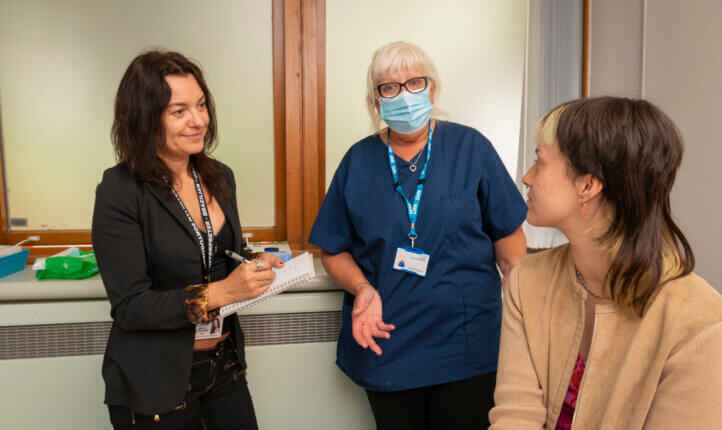
Patients need to understand symptoms, diagnoses, treatment options and advice. Clinicians need accurate information from patients to make informed decisions. Families and carers need to understand how best to support loved ones.
When communication works well, it supports better experiences, better engagement and better outcomes.
When communication becomes more difficult, delivering those same outcomes becomes significantly harder.
Recognising this, NHS England published its Improvement Framework for Community Language Translation and Interpreting Services in 2025. The framework acknowledges that around one million people in the UK speak little or no English and highlights the link between language barriers, poorer access to healthcare, poorer experiences of care and an increased risk of adverse outcomes.
Importantly, the framework positions language access not as a peripheral service, but as part of delivering safe, effective and equitable healthcare.
The Connection to Health Inequalities
Reducing health inequalities remains one of the NHS’s central priorities.
Through programmes such as Core20PLUS5, health systems are working to improve outcomes for communities that experience the greatest barriers to accessing care.
Language can be one of those barriers.
People who face communication challenges may find it harder to understand appointments, engage with preventive services, navigate health systems or participate fully in decisions about their care.
Language barriers also frequently overlap with other challenges, including deprivation, digital exclusion, social isolation and wider social determinants of health.
This is why language access matters beyond the mechanics of translation and interpreting.
It is also about inclusion, participation and ensuring that people can benefit equally from the services available to them.
Supporting Prevention and Neighbourhood Health
Prevention has become a defining feature of modern health policy.
The principle is straightforward: helping people earlier often delivers better outcomes than intervening later when problems have become more complex.
But prevention depends on people understanding the information, advice and opportunities that are made available to them.
A screening invitation only supports prevention if it can be understood.
Advice about managing a long-term condition only works if it is accessible.
Community-based services can only reduce inequalities if communities are able to engage confidently with them.
Seen through this lens, effective communication is not simply an operational consideration. It is part of the infrastructure that enables prevention itself.
As neighbourhood health models continue to evolve, ensuring that communication is accessible and inclusive will be an important part of reaching communities that traditional services sometimes struggle to engage.
Learning from Experience
Healthcare has always adapted and improved by learning from evidence and experience.
Investigations into patient safety incidents across a range of settings have highlighted occasions where communication barriers have contributed to poorer outcomes. These cases have helped reinforce an important lesson: communication is not separate from quality and safety. It is an integral part of both.
The response from policy makers has been encouraging.
Alongside the NHS England Improvement Framework, the Accessible Information Standard and wider equality duties provide a clear direction of travel: healthcare should be accessible, inclusive and responsive to the communication needs of the communities it serves.
The challenge now is ensuring that these ambitions are consistently embedded across increasingly complex health and care systems.
A Shared Opportunity
Perhaps the most positive aspect of the current discussion is that language access is no longer being viewed solely as a compliance issue.
Increasingly, it is being recognised as something that can support multiple system objectives at once:
- Improved patient experience
- Better engagement with services
- More effective prevention
- Reduced health inequalities
- Safer care
- Stronger population health outcomes
Those are goals shared by NHS organisations, local authorities, community organisations and voluntary sector partners alike.
There is also a growing recognition that success should be measured not simply by the number of interpreting assignments delivered, but by the outcomes they help achieve. As health and care systems become increasingly focused on prevention and reducing inequalities, questions such as whether more people access screening, fewer appointments are missed, and patients better understand their care may provide a more meaningful measure of impact
Looking Ahead
As neighbourhood health models develop and systems continue to focus on prevention, there is an opportunity to think about communication in a broader way. Not simply as a support service. Not solely as a regulatory requirement. But as one of the foundations that enables people to access, understand and benefit from healthcare.
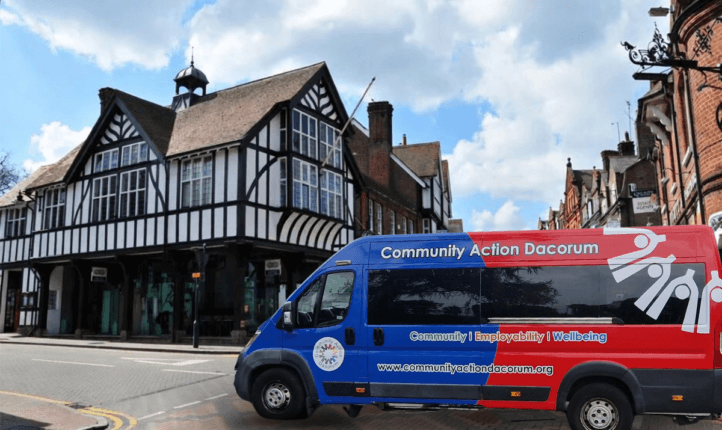
This is a lesson that becomes particularly clear when viewed from the community level. Through Hertfordshire Interpreting and Translation Service (HITS), Community Action’s specialist interpreting and translation enterprise, we regularly see how language and communication support, including BSL interpreting, can influence a person’s ability to engage with healthcare, understand information and access support at the earliest possible stage. Those experiences reinforce what policy and research are increasingly telling us: that communication is not simply a transactional part of healthcare delivery, but one of the factors that helps determine whether care is accessible, equitable and effective.
The NHS has already recognised the importance of this through its policy direction. The challenge and opportunity now lie in continuing to turn that recognition into practical, consistent delivery across health and care systems.
Because achieving better health outcomes starts with many things.
And one of the most important is ensuring that people can understand and be understood.
About HITS
Community Action’s service: Hertfordshire Interpreting and Translation Service (HITS) has supported NHS organisations, local authorities and other public sector partners for 25 years, helping people access services through professional interpreting and translation support. Learn more: https://www.hertsinterpreting.org/
Further Reading
- NHS England: Improvement Framework for Community Language Translation and Interpreting Services: https://www.england.nhs.uk/long-read/improvement-framework-community-language-translation-and-interpreting-services/
- NHS England: Core20PLUS5: https://www.england.nhs.uk/about/equality/equality-hub/national-healthcare-inequalities-improvement-programme/core20plus5/
- Neighbourhood Health Guidelines: https://www.england.nhs.uk/long-read/neighbourhood-health-guidelines-2025-26/